name that sidewalk / rules
Name That Sidewalk — How It Was Played
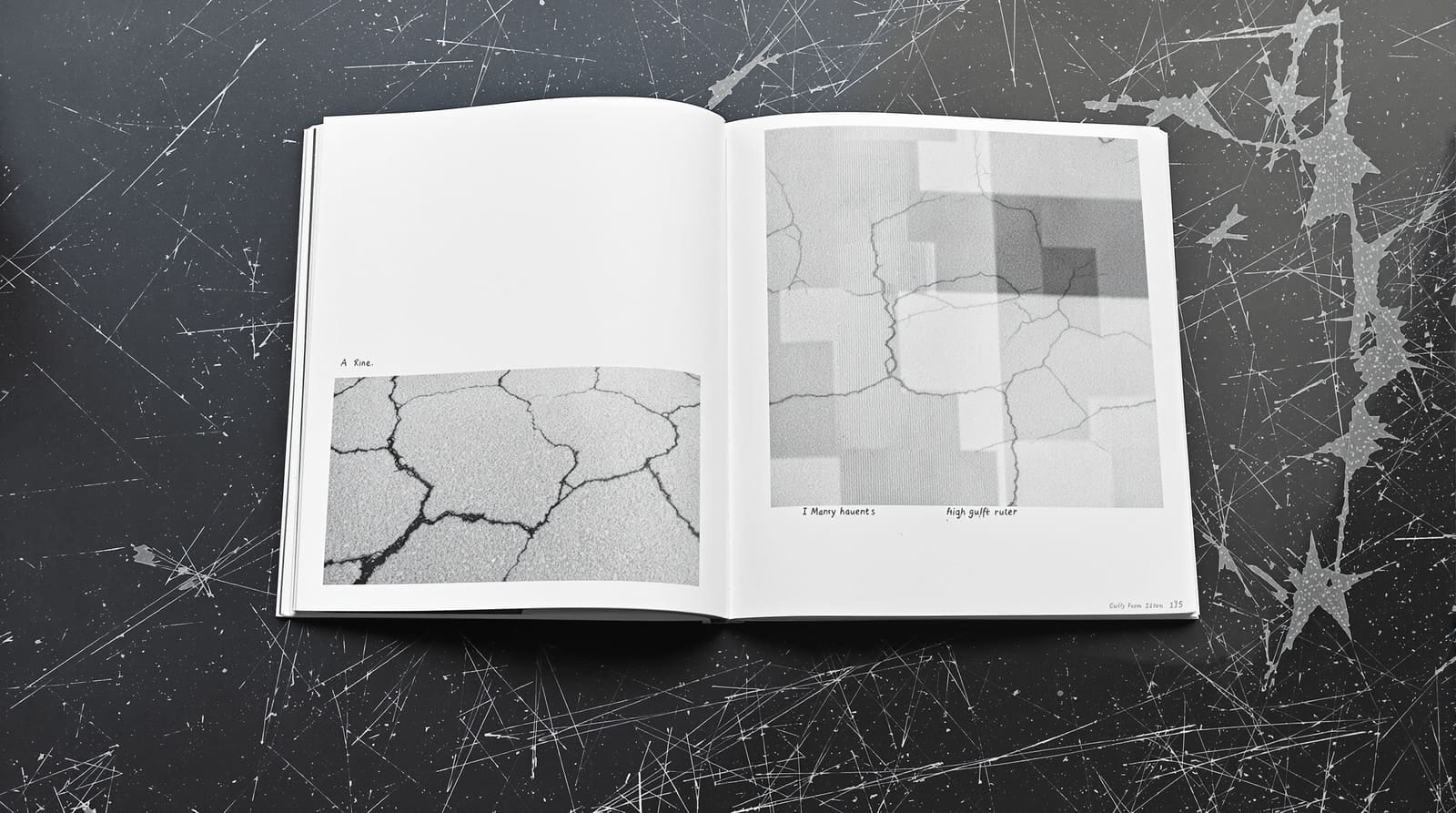
This is the rules page. It described a live monthly contest for several years and it describes a finished one now. Everything below is how the thing worked while it was working. Nothing on this page accepts an entry, and there is no mechanism anywhere on this site by which an entry could be sent.
The original instructions
HOW TO PLAY — Correctly identify this month's sidewalk, and you might win this month's Grand Prize! Carefully examine this month's sidewalk photo and clue or clues. Identify the exact geographical location of the sidewalk pictured. Be the first correct entry to Name That Sidewalk and you could win — unless you blow the opportunity, like you always do!
That was the whole of it, and it was on the page unchanged from the first contest to the last. The tone was not an accident. A contest with a prize worth less than the postage cannot be run any other way.
The photograph
Every sidewalk was photographed from directly overhead, at a height of roughly five feet, in flat light. Shadows were avoided on purpose, since a shadow gives away a compass bearing and a time of year, and we were not that generous. Nothing identifiable was permitted into the frame: no shoes, no signage, no kerb markings, no shopfront reflected in a puddle. Twice a photograph was withdrawn and reshot after a reader pointed out that a drain cover in the corner carried a foundry mark narrowing the answer to one county.
The photographs were taken on ordinary consumer colour film and scanned on a flatbed, which is why they look the way they do. The history of that film, and of the several colour processes that preceded it, is kept properly by the George Eastman Museum, an institution which has never had to explain why it photographed a puddle.
The clues
One clue was published with the photograph. A second was published if a contest ran past two weeks unsolved, and a third if it ran past four, at which point the third clue was usually the answer with two letters missing.
Clue conventions, such as they were:
- A clue was a single sentence, and it was always true. We were unhelpful on purpose, never dishonest, with one exception in the second contest, where a word was transcribed wrongly from our own notes and published as given. The reader solved it anyway.
- A clue never named a state, a city, a street, or a business. It might name a decade, a material, a smell or a weather condition.
- Weather visible in the photograph was not a clue and was never intended as one. Several readers built elaborate meteorological cases on a wet paving slab and got nowhere.
- Chewing gum was not a landmark. This had to be said more than once.
What counted as correct
An identification had to place the sidewalk precisely enough that a stranger holding the entry could stand on it. In practice that meant the town and the specific frontage: the pool, the post office, the bowling alley. "Somewhere in Ohio" was not an answer. "Around the corner from the other one" was not an answer either, and was submitted four times.
Naming the building was sufficient even where the reasoning was plainly invented afterwards. We did not require working, and we did not award marks for it. Lucky guesses counted, which is a rule we published in advance and never regretted, though it did mean the fifth contest was solved from another continent by a man reasoning about aggregate.
Ties
There were no ties. Entries arrived in an order and the order was the answer to any question about precedence, a policy which sounds severe and which prevented every argument it was designed to prevent. Two correct entries on the same day were both correct and one of them was second. Second place received our regards and nothing else.
The satellite policy
House policy prohibited the use of personal satellite photography equipment to identify sidewalks. The rule was written in 2002 as an obvious absurdity, on the reasoning that no reader could possibly own a satellite, and it aged into a rule about consumer aerial imagery within about three years, at which point it was doing real work and we left it alone. It remains our position that the contest was better before you could look down at the world from above, and that the ban was the only forward-looking thing this magazine ever did.
Prizes
Each contest offered a Grand Prize, described in full catalogue register on its own page: full-metal construction, screw holes for easy mounting on bulletin board or tiny car, suitable for showing to friend or spouse. What was actually mailed was a keyring, a spoon, a bottle opener, a pennant or an ashtray. The gap between the description and the object was not a trick; it was the prize.
What each of the seven contests turned out to be, and what was sent for it, is recorded in the final results. The complete terms and conditions, all fifty-odd of them, are available at the fine print, and should be read before entering, which you cannot do.